In partnership with


Fellas,
I found a father's story. He didn't give his name. After everything he'd been through, there were parts of the story he still didn't want his children to know, because he never wanted his story to become their embarrassment.
So after thirteen years of what he called hell, and another year before he finally felt like a father again, he told his story without telling us who he was.
I read the whole thing. Then I read it again. Because somewhere inside all the court battles, accusations, child support, apartments, fear, loneliness and years he could never get back, there was another story hiding. A much simpler one. A man kept going. And fourteen years is a long damn time to keep going.
The Day They Were Gone
He married his high school sweetheart. They fought, he said, but nothing that seemed particularly unusual at the time. Then came a daughter. Then a son. And then one day he came home from work and they were gone. His daughter was three.
His son wasn't even one. He went looking for them. He drove to his wife's parents' home that night, expecting, to find the same people who had once welcomed him as family.
Instead, he described encountering anger and hostility he couldn't understand. And just like that, the life he'd left for work that morning no longer existed.
Bad news usually gives you some kind of warning. The doctor sits you down. Your boss closes the office door. A police officer calls. And when you see smoke, you already know there's a fire.
Then there are earthquakes. Hurricanes. The kind of disasters that leave everything in their path unrecognizable.
That's closer to what was happening inside him.
His hands trembling. His stomach turning. His mind struggling to understand what he was seeing.
Fear. Anger. Confusion. A thousand thoughts spinning at once.
He lost his children. Then his home. He says he faced false allegations of assault. He was called a deadbeat. He was warned that failure to keep up with child support could put him in jail.
He had no savings. And even the people who loved him didn't seem to know what to do with his grief. So they gave him the advice men have been giving other men forever.
Man up.
Keep working. Handle your responsibilities. Pay what you owe. Keep moving. And he did. But that's not the same thing as being okay.
He later described that period as his personal rock bottom.
The time he had with his children became uncomfortable. He was afraid. According to his account, after facing allegations he believed were false, affection suddenly carried risk.
Hugs became different. Roughhousing stopped. Wrestling stopped. Think about what that does to a man.
Think about that. Your child runs toward you, and instead of just being Dad, you're thinking about where you put your hands. You're thinking about whether a bruise from playing could be misinterpreted. You second-guess discipline. You second-guess affection.
You can't just be Dad anymore. You're watching yourself be Dad. The time is already limited, and now you can't even fully inhabit it.
He cherished seeing them. And he was anxious while they were there. Then they'd leave. And the anxiety would be replaced by something worse. Silence.
He described returning to his small apartment and being overwhelmed by the emptiness. Then he'd wait. Sometimes another two weeks. Sometimes four. And the cycle started again.
I miss them. Then: They're coming. Then: Don't screw anything up. Then: They're leaving. Then silence. Then: I miss them.
Around and around.
His children had a home somewhere else. Their beds were there. Their toys. Their friends. Their normal life. Sometimes the kids were bored. Sometimes they called their mother and wanted to go home.
And Dad did what frightened parents sometimes do when they're no longer confident that simply being there is enough. He tried to compete. He bought things. He tried to plan activities. He felt pressure to make every visit something. And "something" often cost more money than he could afford.
That part hit me because I've been that guy. Whatever new toy or game system came out, I wanted my kids to have it. No matter what it cost me. If it took my last dollar, they got it.
And I think this can hit even harder when you grew up without much yourself. You already came into fatherhood saying, My kids are going to have the things I didn't have.
Then divorce adds another weight to it. Now you're not only trying to give them what you never had; part of you is trying to make up for the time you don't have with them.
That's a dangerous combination for your wallet.
Divorce can do strange things to ordinary fatherhood. Breakfast becomes an event. A weekend becomes a performance. Silence becomes uncomfortable. Boredom becomes threatening.
You start believing every minute has to justify why your child came. And eventually, you can become so busy trying to create a good visit that you forget children don't always need a good visit. Sometimes they just need, normal.
The Years Nobody Gives Back
His children grew, and although he knew the surface things, their favorite foods, colors, sports, he admitted that he didn't really know them anymore. Their friends. Their feelings. Their dreams. The little things you only learn through ordinary time together.
And the years kept passing. Five. Seven. Ten. At some point, it would have been understandable to accept that this was simply his life now.
Then, when his daughter was sixteen, something changed. She started choosing him. She came around because she wanted to.
She wanted structure. Rules. Love. And slowly, the relationship he'd spent years trying to hold onto began finding its way back. He later said his daughter saved his life.
It took fourteen years. Fourteen years after his divorce, he finally said he felt like a father again. And from there, his life began moving again too. He started a new career. Built savings. Bought a house.
After fourteen years of feeling like he'd lost his life, he began building one again.
The Father in the Van
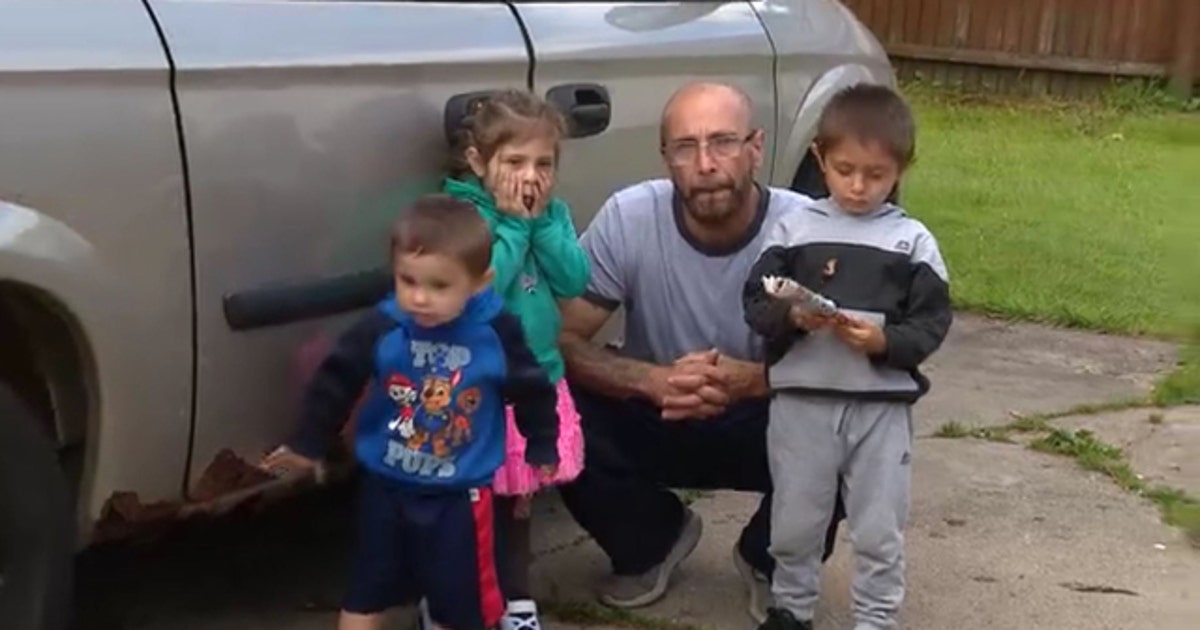
Another father I found had a very different story. His name is Joseph Cantu. In 2019, Cantu was living in Michigan with five children. His wife had left the family. Then they lost their home. Cantu still had five children to care for, including several who weren't yet in school. Without someone to watch them, he lost his job as an automotive polisher.
Then came the problem you don't necessarily think about until you're the father standing there asking for help. Cantu said he struggled to find a local shelter that would accept a man with children. So he improvised. Some nights the family slept in their van. Sometimes he'd pull into a rest area and they'd sleep there. When somebody gave them enough money, they'd get a motel room.
Five children. In a van. And the thing that seemed to bother Cantu most wasn't simply that he was homeless. His children were experiencing it with him. He told a reporter he hoped they were young enough that they wouldn't remember.
There's something painfully fatherly about that. He's sleeping in the same van. He's lost the same home. He's lost his job. He's the one trying to figure out where six human beings are going to sleep tomorrow night. And somehow his mind is still over there. I hope this doesn't hurt them.
That's fatherhood. Sometimes triumph isn't having everything figured out. Sometimes it's finding somewhere safe for your children to sleep tonight. Sometimes there is no five-year plan. There's a van. A rest stop. Five kids. And morning. So you get them to morning. Then you figure out Monday.
The Man at Secaucus Junction
Then there's Jose Lopez. His story took even longer. Lopez separated from his wife and eventually moved from New Jersey to Florida. His daughters were young when he lost touch with them. One was seventeen. The other was ten. Years passed. He eventually reconnected with them by phone, but after suffering a series of strokes and becoming homeless, contact disappeared again.
Then, at sixty-one years old, Lopez decided he was going to find his girls. He took his Social Security money and traveled from Florida back to New Jersey. He was trying to reach Bradley Beach. Instead, he ended up at Secaucus Junction. Homeless. Confused. Still looking.
And that's where another man entered the story. NJ Transit crisis outreach officer Sean Pfeifer learned what Lopez was trying to do. He could have pointed him toward the right train. Instead, he started making calls. Dozens of them. Looking for Lopez's family. Eventually, one of the messages reached his daughter.
Before the reunion, Pfeifer helped Lopez get cleaned up. A shave. A haircut. Fresh clothes. And after twenty-four years, Jose Lopez saw his daughters again. He also met grandchildren he'd never met before.
One of his daughters remembered his eyes. Twenty-four years. Homelessness. Strokes. Distance. A lifetime of things changing. And she remembered his eyes. Lopez described the reunion as feeling like heaven.
Lopez needed help. He had made it all the way from Florida to New Jersey looking for his daughters, but he couldn't finish the journey alone.
Then somebody helped him with the next mile. Sometimes perseverance means holding on for fourteen years. Sometimes it means getting as far as you can, then accepting a hand when someone reaches for you.
The Part Worth Celebrating
We talk a lot here about what fathers should do. How we should lead. How we should respond. How we can do better.
But sometimes I think we should simply admire Fatherhood.
Admire the father sleeping in a van with five children, still worrying about what they will remember. Admire the sixty-one-year-old homeless man who traveled across the country looking for his daughters after twenty-four years. Admire the father who lost his home, lost years with his children, and spent fourteen years trying to find his way back to himself.
These men went through some hard shit.
And they made it through.
Not every father will get the same ending. Some doors don't reopen. Some years can't be returned. Some relationships don't find their way back.
But these did.
And I don't know, fellas. Stories like these remind me of the strength fathers are capable of, even when the man himself may not realize he has it.
That's part of why I keep writing these letters.
Sometimes we need information. Sometimes we need encouragement. Sometimes we need somebody to tell us what we could do differently.
And sometimes we just need to be reminded of what fathers have survived.
Until next time,
Barkim

Quotes:
“Wisdom is often just the courage to pause before you act.”
“A man grows strongest the moment he stops hiding from his own truth.”
“Peace isn’t found by avoiding storms, but by learning which ones are worth walking into.”
“The hardest lessons don’t shout; they wait for you to finally listen.”
“Strength is knowing when to hold the line and when to let go of what’s breaking you.”
“A father’s influence is measured less by his words and more by his consistency.”
“Growth begins the moment you stop blaming the past for who you are today.”
“Patience is not waiting quietly — it’s trusting that time is doing work you cannot see.”
“A man becomes wise when he learns to separate what hurts from what matters.”
“Healing doesn’t erase the past; it teaches you how to carry it without losing yourself.”
Health/News/Tools:
Want to get the most out of ChatGPT?

ChatGPT is a superpower if you know how to use it correctly.
Discover how HubSpot's guide to AI can elevate both your productivity and creativity to get more things done.
Learn to automate tasks, enhance decision-making, and foster innovation with the power of AI.